
All Skills & Courses

Personality Development · Dehradun

Build confidence through deliberate practice.

Practise how you speak, listen, present, interview and write—then use specific feedback to improve how you communicate when the situation matters.

Designed for students from Grade 9 onwards, graduates and young professionals. The current level and batch are confirmed after understanding the learner.

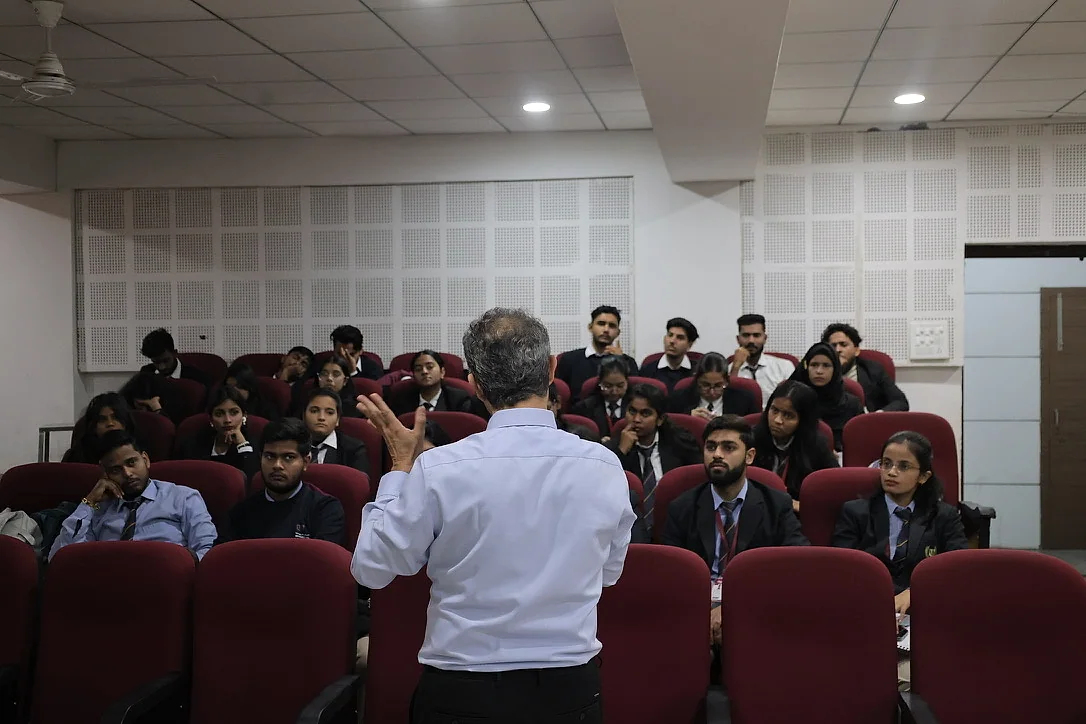
Students taking part in a guided group learning session
Communication becomes stronger through participation, reflection and another attempt.

Practice in the room

A safe place to get it wrong first.

Public speaking and interview confidence do not grow from advice alone. A guided group gives learners an audience, a real response and the chance to adjust before a higher-stakes situation.

The learning areas

Confidence is treated as something learners practise.

Every part of the programme connects to a real situation. Learners take part, receive feedback, reflect and try again.

01

Communication

Clarity · listening · spoken English

Express ideas clearly in different situations

Learners practise listening, conversation, discussion and structured responses. The goal is not to manufacture a new personality—it is to communicate with greater clarity and confidence.

  • Spoken English and conversation practice
  • Listening, discussion and impromptu speaking
  • Individual feedback on clarity and delivery
02

Public speaking

Structure · delivery · audience

Prepare and present without hiding behind the slides

Students learn to organise a message, use voice and body language purposefully, and respond when the audience or situation does not follow a script.

  • Presentation structure and slide delivery
  • Voice, body language and handling nerves
  • Practice in a supportive group setting
03

Interview preparation

Questions · evidence · composure

Answer honestly, specifically and with composure

Mock interviews help learners speak about their experiences, strengths and decisions without memorised answers. Feedback focuses on both the substance of the answer and how it is communicated.

  • Common and unexpected interview questions
  • Mock interviews with useful feedback
  • Professional presence under pressure
04

Professional communication

CV · email · written presentation

Write in a way that represents the learner accurately

Learners work on clear professional writing, including CVs and email communication. The emphasis is on honest, relevant content rather than impressive-sounding templates.

Compare all practical-skills programmes
  • CV and profile writing
  • Professional email communication
  • Adapting the message to its audience

Choose the right starting point

Begin with the situation the learner is preparing for.

The programme should answer a present need, whether that is everyday communication, a presentation, an interview or the transition into university or work.

  1. 01

    Name the present need

    Tell us the learner’s age and the communication, presentation or interview situation they want to handle better.

  2. 02

    Confirm the suitable level

    Rosemounts reviews the current starting point and explains the relevant active batch and format.

  3. 03

    Practise and review

    The learner participates in guided activities, receives feedback and applies it in the next attempt.

Questions people ask

What to know before you begin.

Who can join Personality Development classes?

The current programme is designed for students from Grade 9 onwards, graduates and young professionals. The appropriate starting point depends on the learner’s age and present need.

Is Personality Development the same as spoken English?

No. Spoken English and communication are part of the programme, but it also includes public speaking, presentations, interview preparation, professional writing and professional presence.

Is this a motivational course?

No. Confidence is built through deliberate practice, specific feedback and repeated participation. The sessions focus on usable skills rather than motivational theory.

Are the classes individual or group-based?

The programme uses guided group practice because learners need an audience and peer interaction. Individual feedback is included so each learner knows what to work on next.

How long is the programme?

Duration and timetable depend on the learner group and current batch. Rosemounts confirms the suitable level, active schedule and fees before registration.

Begin with a conversation

What situation does the learner want to handle better?

Share the learner’s age and present need. We will explain the suitable Personality Development starting point and current batch.

Send an enquiryCall +91 7302222330info@rosemounts.org