
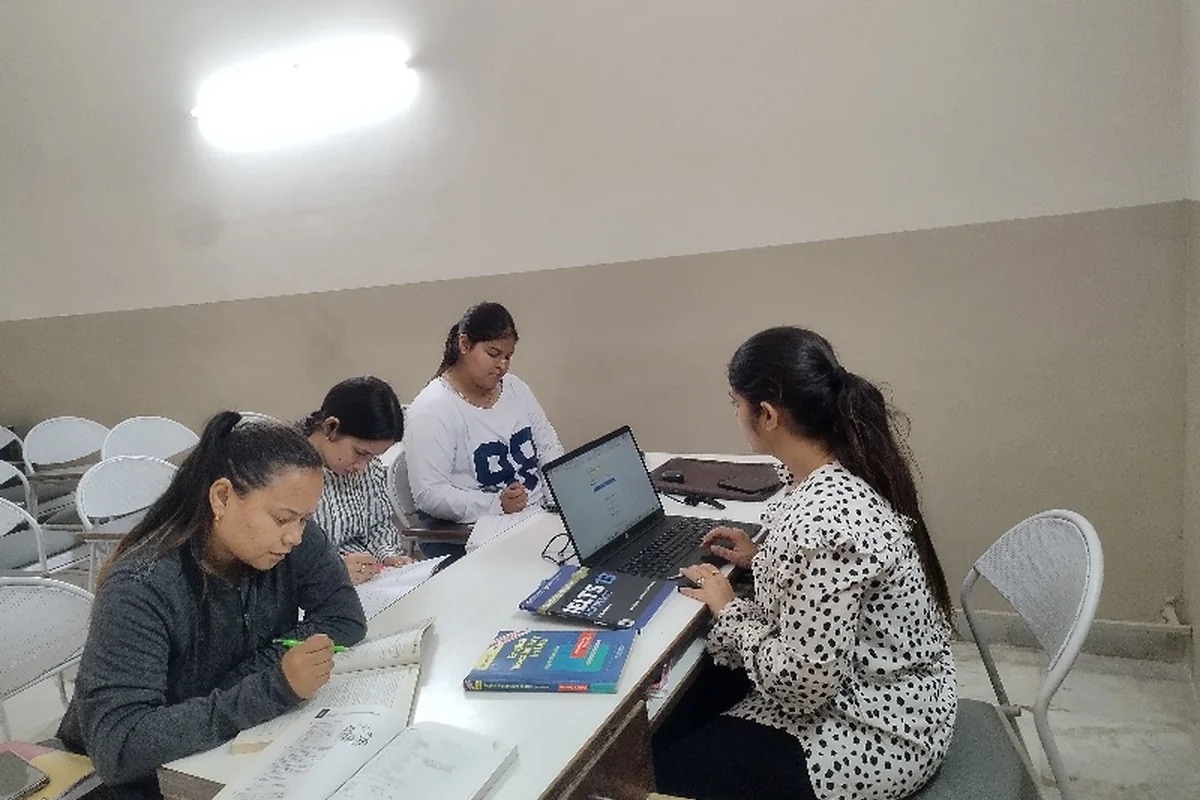
What design thinking means in career counselling
Design thinking is a human-centred way to investigate an uncertain problem. Stanford’s d.school describes five commonly used modes: empathise, define, ideate, prototype and test. The d.school also cautions against treating them as one rigid, linear process. A useful discovery can send the student back to reframe the question or create a different prototype.
Stanford’s Life Design Lab applies this broader approach to life and career questions. Students reflect, generate alternatives and prototype aspects of a possible future. Career-construction and life-design literature similarly treats careers as contextual and developing rather than as one choice made once and followed forever.
For a school student, the practical benefit is permission to learn before deciding. Uncertainty becomes a question that can be investigated instead of a weakness that must be hidden.
The five modes applied to a career question
The familiar five-mode language is useful when each mode leads to a visible action. The objective is not to complete a worksheet in order; it is to improve the quality of the student’s next decision.
1. Empathise: understand the student’s lived reality
Begin with the student’s experiences, interests, values, strengths, doubts and constraints. Ask what activities create energy, what kinds of problems hold attention and what the student has actually enjoyed enough to repeat. Family expectations, finances, location, health, language, exposure and access also belong in the picture.
Empathy is not agreement with every first preference. It means understanding the meaning behind the preference before advising or challenging it.
2. Define: frame a question that can be explored
“What should I become?” is too broad to investigate. A more useful question might be: “How might I learn whether I enjoy the day-to-day work of psychology?” or “Which combination of design and technology would I like to test this term?”
A good frame is specific enough to guide action but open enough to allow more than one answer.
3. Ideate: create more than one possible future
Students often compare one desired career with failure. Ideation breaks that false binary. The student can sketch several plausible routes: different subjects, roles, industries, educational pathways or ways of combining interests.
Stanford’s life-design course uses an Odyssey Plan to help students imagine alternative futures. In school counselling, the underlying principle matters more than the label: generate distinct options before ranking them.
4. Prototype: try the smallest useful version
A career prototype is a low-risk experience designed to answer one question. It could be an informational interview, supervised job shadow, sample university lecture, short project, workplace visit, volunteering task or conversation with a current student.
The prototype should resemble a meaningful part of the work or pathway. Watching a glamorous video about architecture is exposure; attempting a small design brief and discussing revisions with an architect creates stronger evidence.
5. Test: reflect, revise and choose the next step
Testing does not mean proving that the student is suitable or unsuitable after one activity. It means asking what the experience revealed: Which part was engaging? Which difficulty felt worth practising? What assumption changed? What further evidence is still missing?
The output may be a clearer commitment, a revised option or a decision to stop pursuing one route. All three can be useful when the reasoning is recorded honestly.
Assessment and design thinking do different jobs
Career assessments can organise information about interests, values, personality tendencies, skills or aptitude. They can reveal patterns and tensions that deserve attention. They cannot recreate the daily reality of a course or occupation.
Design thinking adds action. If an assessment suggests investigative interests, a prototype can test whether the student enjoys gathering evidence, tolerating ambiguity and explaining a finding. If a values conversation highlights independence, several prototypes can show how independence actually appears in different work environments.
The two approaches are strongest when they challenge each other. A result can suggest what to explore; experience can confirm, complicate or contradict the result. Neither should be allowed to become a verdict.
Why this approach fits the Indian school context
Indian students often make subject, entrance-exam and course decisions before they have had much exposure to the work behind a career title. Design thinking cannot remove constraints, but it can make exploration more deliberate and visible before a commitment is made.
CBSE has published Design Thinking and Innovation taskbooks for Grades 6 to 8 and Grade 9, and its skill-education material includes design thinking at secondary level. The Grade 6 taskbook emphasises curiosity, exploration, problem-solving and reflection; the Grade 9 taskbook includes problem identification, empathy, research, ideation and design projects.
That curriculum presence does not mean every school offers the subject or that completing a design task automatically produces career clarity. It does show that the habits required for career prototyping can connect with work schools may already be doing.
A four-week career-prototyping cycle
A short cycle can be useful when it ends with evidence and a next decision. The counsellor should adapt the scope to the student’s age, access and safeguarding needs.
- Week 1 — Frame the question. Review the student’s evidence, name the assumption to test and sketch at least three plausible routes.
- Week 2 — Learn from people. Hold two structured conversations with people who know the course, training route or work. Compare their experiences instead of treating one story as universal.
- Week 3 — Try a task. Complete a small, supervised activity that resembles one part of the pathway: analyse a case, create a brief, observe a process, solve a problem or attend a sample class.
- Week 4 — Review the evidence. Record what attracted, frustrated or surprised the student; check pathway realities; and choose whether to deepen, redesign or stop the exploration.
Examples of useful career prototypes
A useful prototype is built around a question, not a prestigious activity title. It can be modest and still produce strong learning.
- Psychology — interview a practitioner about their training and ethical responsibilities, then analyse a published case scenario without attempting diagnosis.
- Architecture or design — complete a small user brief, create alternatives and seek critique on the reasoning rather than only the final appearance.
- Computer science — build or modify a small tool, document the debugging process and ask whether sustained problem-solving was energising.
- Public policy — compare evidence about a local issue, identify affected groups and write a one-page options note with trade-offs.
- Hospitality — observe a supervised service workflow, speak with two people in different roles and reflect on pace, customer contact and operational detail.
The counsellor designs the learning conditions
The counsellor’s role is not to make every option sound equally good. It is to help the student frame a fair test, distinguish evidence from impression and connect the learning to real pathway requirements.
The counsellor should also notice when the proposed prototype is too easy, too artificial or inaccessible. A career conversation with a family friend may be useful, but it can reflect one employer, city and career stage. A more balanced cycle deliberately seeks different perspectives.
- Name the assumption before choosing the activity.
- Agree what evidence the student will collect and how it will be reviewed.
- Prepare the student to ask about ordinary tasks, difficulties and training—not only success stories.
- Check current subjects, eligibility, cost, location and alternative pathways separately.
- End with one reasoned next step and a date for review.
Safeguarding, access and limitations matter
Career prototyping should not depend on family connections or the ability to accept unpaid work. Schools can widen access through alumni conversations, shared workplace visits, virtual interviews, teacher-supervised projects and partnerships that serve a whole cohort rather than a few students.
Workplace contact involving minors needs consent, supervision, privacy protection and clear boundaries. Students should not handle confidential records, perform regulated work or be placed in unsafe environments for the sake of exposure.
One positive or negative experience is not a final judgement on an occupation. The host, task, timing and student’s prior preparation all shape the result. The honest conclusion may be that more evidence is needed.
Keep a decision log, not just a list of activities
A portfolio becomes useful when it records learning rather than accumulating participation. After each prototype, the student can capture the original question, what they did, what they observed, what changed and what remains uncertain.
Over time, the log reveals patterns. The student may repeatedly enjoy explaining complex ideas, working with physical systems or helping people make decisions. It may also expose constraints that require a different route. This evidence makes the next counselling conversation more specific.
- Question tested and assumption held before the activity
- Task completed, people consulted and limits of the experience
- Moments of energy, difficulty, curiosity and avoidance
- Feedback received and the student’s response
- Pathway facts checked from current authoritative sources
- Decision: deepen, redesign, pause or stop—and why
Sources and review
- Stanford d.school — Design Thinking Bootleg
- Stanford Life Design Lab — Designing Your Life
- Savickas and colleagues — Life designing: A paradigm for career construction
- CBSE — Design Thinking and Innovation Task-book for Grade 6
- CBSE — Design Thinking and Innovation Task-book for Grade 9
- CBSE — Skill Education books and support material
This public guide was adapted from Rosemounts’ 22 August 2026 Drive research, Strategic Integration of Design Thinking in Career Guidance for Indian School Students. Claims supported only by commercial or secondary sources were removed. The published version relies on official CBSE material, Stanford’s design-thinking and life-design resources, and established career-construction literature; the four-week cycle is Rosemounts’ practice framework, not a validated outcome protocol.
Frequently asked questions
What is design thinking in career counselling?
It is a structured way to understand the student’s context, frame a career question, create several possibilities, run small experiments and use the learning to choose a next step. It supports exploration; it does not decide a career for the student.
What counts as a career prototype?
A prototype is a low-risk activity designed to answer one question about a course, pathway or type of work. Examples include an informational interview, supervised observation, sample class, short project or realistic task followed by reflection.
Does design thinking replace a career assessment?
No. An assessment can organise evidence about the student; a prototype creates new evidence through experience. Both need context and careful interpretation, and neither should be treated as a guaranteed prediction.
Can schools use this without arranging internships?
Yes. Schools can use alumni interviews, virtual workplace conversations, teacher-supervised projects, sample lectures, role comparisons and community problem briefs. The activity should still test a clear assumption and end with reflection.
How many career prototypes should a student complete?
There is no universal number. A student needs enough varied evidence to answer the current question and compare plausible options. One experience should not be treated as conclusive, especially when the decision is difficult to reverse.
What to do next